
Adductor and groin strength testing, explained
Groin injuries are among the most common in field sport. Here's how adductor strength testing flags risk early, and how GroinMate measures the squeeze test objectively.
Published July 29, 2026 · 6 min read
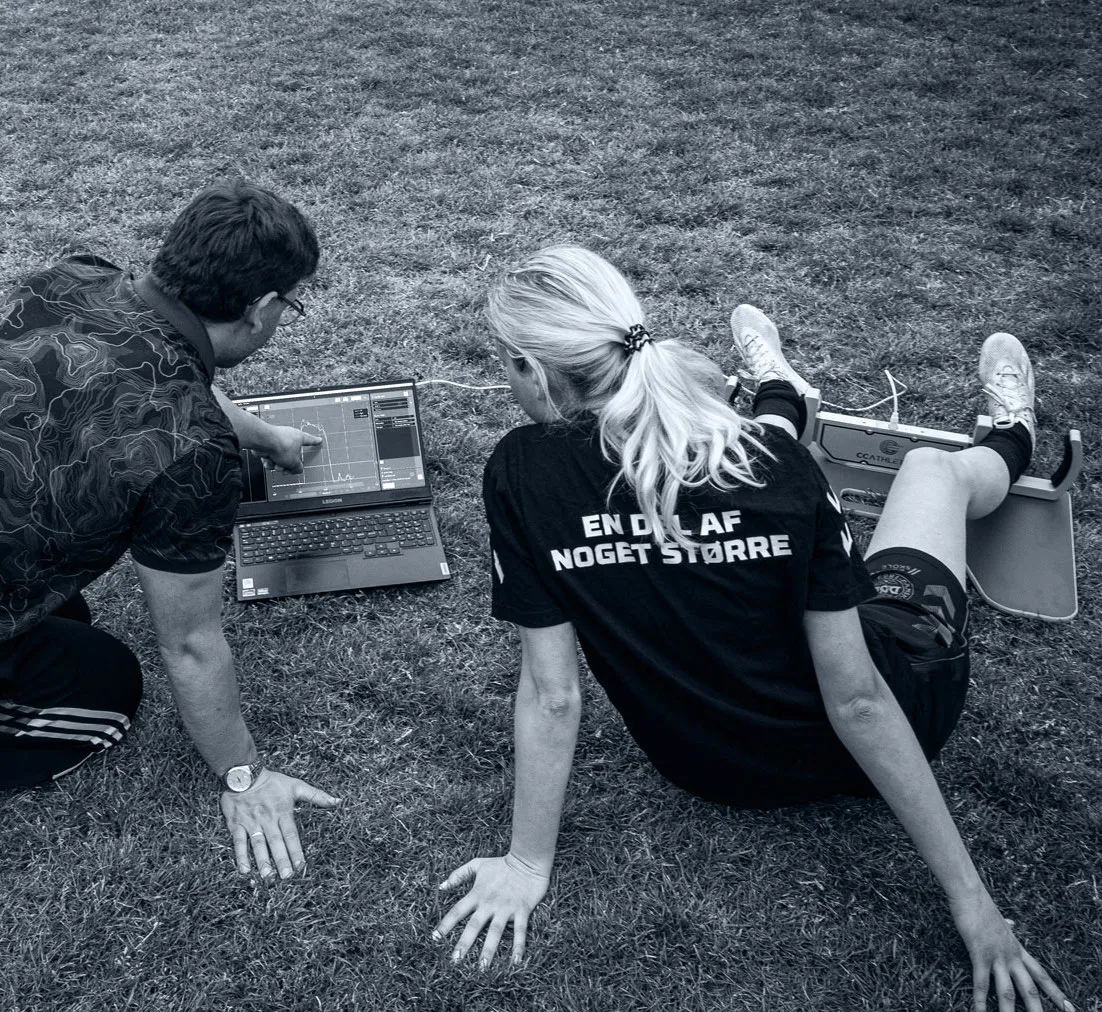
Adductor and groin strength testing measures how much force the muscles on the inside of the thigh can produce: the “squeeze” that pulls the legs together. It is one of the most useful screening tools in field sport, because low or dropping adductor strength is a well-established, modifiable risk factor for groin injury, and it can be tracked in seconds.
Why does groin strength matter?
Groin (adductor-related) injuries are among the most common time-loss injuries in football, hockey, and other sports built on sprinting, cutting, and kicking. They’re also stubborn: once an athlete has had one, they’re at markedly higher risk of another.
Groin pain isn’t a single thing, though. The Doha agreement, the standard clinical classification, divides it into adductor-, iliopsoas-, inguinal- and pubic-related types, with adductor-related among the most common. Strength testing targets that adductor-related component specifically. It won’t diagnose every groin complaint, but it measures the piece that’s easiest to change.
What makes adductor strength worth testing is that it’s actionable. Unlike many injury risk factors, it can be measured quickly and improved with training. Research has repeatedly shown that a drop in adductor squeeze strength can appear before a groin problem becomes symptomatic. It won’t predict injury on its own, but it’s one of the few early-warning signals you can measure objectively and act on: back off, add adductor work, or clear an athlete to play.
What is the adductor squeeze test?
The adductor squeeze test, often just called the squeeze test, asks an athlete to squeeze their legs together against a resistance as hard as they can while the force is measured. Traditionally it’s done lying down with the hips flexed, squeezing against the examiner’s fist, a rolled-up blood-pressure cuff, or a hand-held dynamometer.
The idea is simple and the test is quick, which is why it’s become a standard part of pre-season screening and in-season monitoring. Its weakness is how it has usually been measured, which the next section covers.
Adduction, abduction, and the ratio that matters
Two numbers matter more than raw squeeze strength on its own:
- Left–right asymmetry. A meaningful difference between limbs is a flag, both for injury risk and for tracking recovery after a groin injury.
- The adduction-to-abduction ratio. Adductor strength is most informative relative to the opposing abductors (the muscles that move the leg outward). In healthy athletes this ratio is typically around 1.0. A meaningfully lower ratio, with the adductors weak relative to the abductors, is the pattern much of the injury-risk research points to. Our guide to the Add/Abd ratio goes deeper on the research and how to interpret it.
Testing both adduction (squeezing in) and abduction (pushing out) on the same device gives you that ratio directly, alongside each limb’s individual force.
Why objective measurement matters
The classic squeeze test’s problem is that “as hard as the examiner can resist” isn’t a number. Manual testing is subjective, hard to reproduce between clinicians, and easily biased by the tester’s own strength. That makes it poor for spotting the small, early strength changes that matter most.
A dedicated dynamometer fixes this by recording the actual force. GroinMate measures adduction and abduction force for each leg independently, so you get peak force per side, the adduction-to-abduction ratio, left–right asymmetry, and rate of force development. These are the same objective, trackable metrics you’d expect from force plate testing, applied to the groin. Instead of “feels a bit weak on the left,” you get a figure you can chart across a season.
How to test adductor and abductor strength with GroinMate
The setup is quick and needs no rack or plates:
- Place the device on a stable, flat surface and connect it to the laptop running ForceMate.
- Sit with the legs extended and place the ankles in the frames, one on each side, so the pads sit against the inside (for adduction) or outside (for abduction) of each ankle.
- For adduction, squeeze the legs inward against the frames as hard as possible on the command, holding maximal effort for a few seconds.
- For abduction, press the legs outward against the frames the same way.
- Take two to three efforts per direction with full rest between them, keeping cues identical each time.
- Read peak force, left–right asymmetry, and the adduction-to-abduction ratio in ForceMate, and save the result so it joins the athlete’s trend over time.
For the exact step-by-step protocol, see the GroinMate instructions in our Test Library.
What’s a good score?
Adductor strength depends on body size, sport, sex, and testing position, so absolute numbers vary widely and published norms should be treated as rough orientation only. Two principles are more reliable than any single target:
- Balance beats absolute strength. Roughly symmetrical left and right sides, and a healthy adduction-to-abduction relationship, tell you more than a big peak-force number alone.
- Track the individual over time. The most powerful use of the test is monitoring. An athlete’s squeeze strength falling below their own established baseline, especially across a congested run of fixtures, is an early warning worth acting on, regardless of where they sit against population data.
Where GroinMate fits
The GroinMate is a dedicated adductor and abductor dynamometer built to make this test fast, portable, and objective. It measures each leg separately, so asymmetry and the adduction-to-abduction ratio come straight out of every test, tracked over time in ForceMate. It’s the same own-your-data approach as our force plates, applied to groin screening.
It’s also used in published research: GroinMate collected the squeeze data in a peer-reviewed study in the Scandinavian Journal of Medicine & Science in Sports that tracked 114 elite youth footballers over nine weeks and found squeeze-test pain predicts on-pitch performance deficits and groin pain in both male and female players.
Getting started
If groin screening is new to your setup, start by baselining every athlete pre-season: adduction and abduction, both legs, recorded consistently. Then re-test on a regular schedule. Many squads test two days after a match (match day +2), when subclinical deficits tend to surface, and more often through congested fixture periods. Watch for drops against each athlete’s own baseline and for growing asymmetry. Those two signals, caught early, are what makes adductor testing one of the highest-value screens in field sport.
Want to see how GroinMate fits into your screening? Get in touch with the CC Athletics team.
Frequently asked questions
What is the adductor squeeze test?
The adductor squeeze test is a simple groin-strength test. The athlete squeezes their legs inward against a resistance, as hard as they can, while the force is measured. The resistance is traditionally the examiner's fist, a rolled-up blood-pressure cuff, or a dynamometer. It is widely used to screen for and monitor groin (adductor-related) problems in field sport.
What does adductor and groin strength testing measure?
Peak adduction force (the inward squeeze) and, ideally, abduction force (the outward press) for each leg separately. From those you get left–right asymmetry and the adduction-to-abduction ratio, the two numbers most linked to groin injury risk, plus rate of force development.
What is a good adductor-to-abductor ratio?
In healthy athletes the adduction-to-abduction ratio is typically around 1.0. A meaningfully lower ratio (adductors weak relative to abductors) is the pattern much injury-risk research points to. Treat that as a rough guide only. An athlete tracked against their own baseline is more informative than any single target number.
Why does groin (adductor) strength matter for injury?
Adductor-related injuries are among the most common time-loss injuries in football, hockey and other sprint-and-cut sports, and once an athlete has had one they are at higher risk of another. Groin pain is multi-factorial, but adductor strength is a modifiable risk factor, and squeeze strength can drop before a problem becomes symptomatic. That makes it one of the few early-warning signals you can measure objectively and act on.
How do you measure groin strength objectively?
A dedicated dynamometer records the actual force each leg produces, rather than relying on how hard the examiner can resist (which is subjective and hard to reproduce). GroinMate measures adduction and abduction per leg, giving peak force, asymmetry, the adduction-to-abduction ratio and rate of force development. You get trackable numbers instead of 'feels a bit weak on the left'.
How often should you test adductor strength?
Baseline every athlete pre-season (adduction and abduction, both legs), then re-test regularly. Many squads test two days after a match (match day +2) and step it up through congested fixture periods. Watch for drops against each athlete's own baseline and for growing asymmetry.
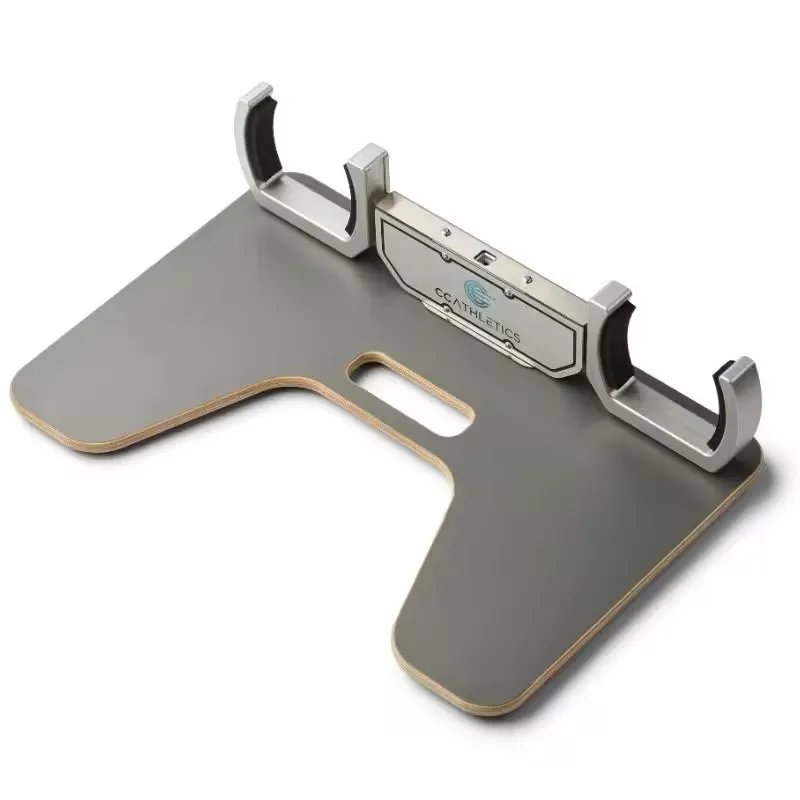
The product behind this article
GroinMate
Isometric testing for hip adduction and abduction
Explore GroinMate →